Tanks Outside, Fire in the Kitchen: The Ordinary People With Nowhere to Retreat
A film review, a history of the war behind it, and an inquiry into what peace looks like from a kitchen door.
Late at night, a deafening blast throws the bed into the air. Xu Fu scrambles up from the floor, and his first thought is: earthquake.
In the life he knows, when a house shakes, it must be the earth that has gone wrong. Only a few seconds later does he understand: this is Baghdad, and what just shook was not the ground, but artillery fire.
As the film goes on, there is more and more fire. The fire of the stove hugs the bottom of the wok, hot oil bursting at its rim; the fire in the streets climbs up cars and window frames, crowds scattering through the smoke. Xu Fu stands between the two kinds of fire, holding nothing but a wok spatula.
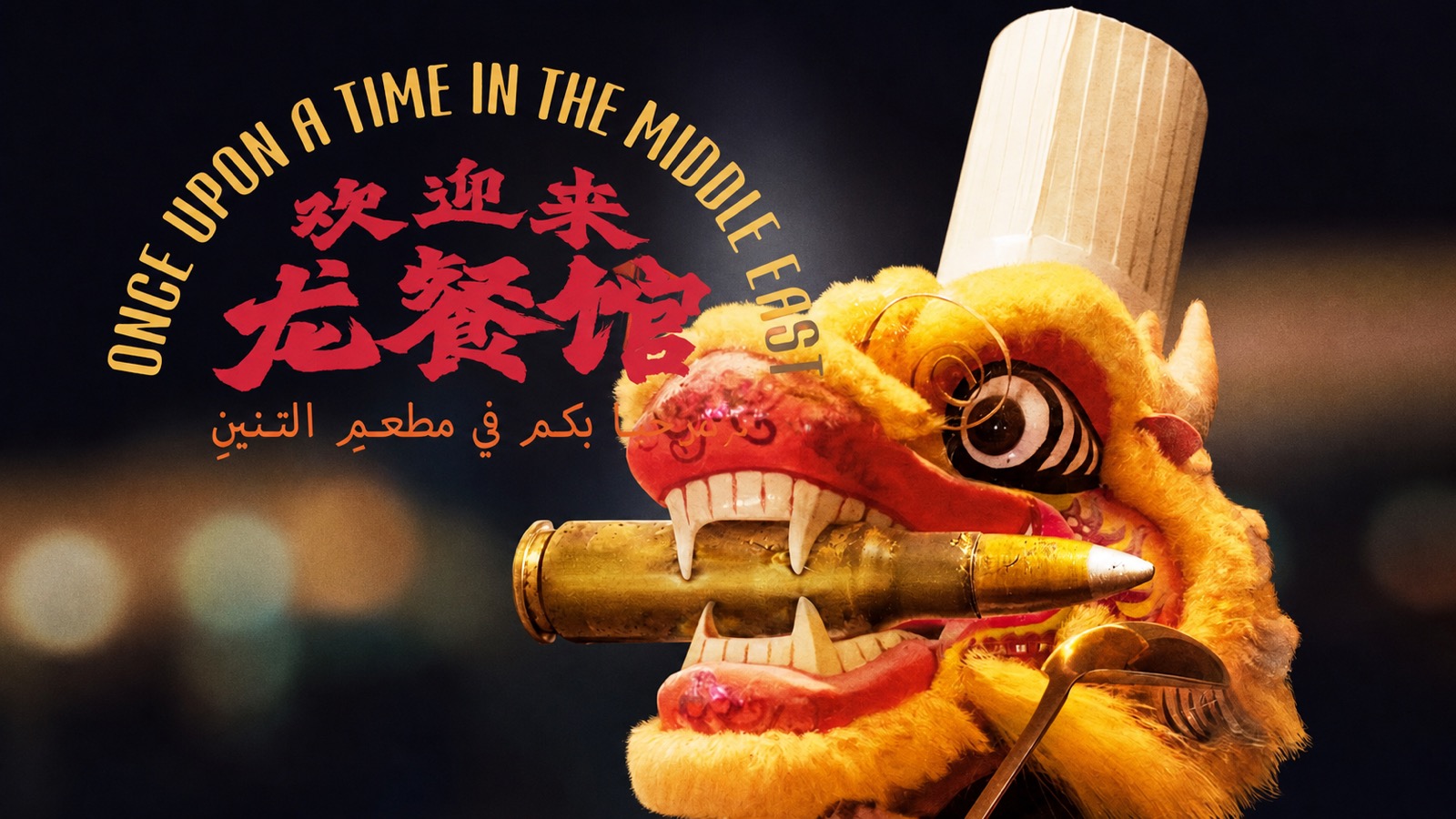
Beyond the screen, a story much like this one really happened.
On the last night of 2003, before Baghdad had even reached the new year, sixty or seventy American tank crewmen walked into a Chinese restaurant that had not yet officially opened. The kitchen rushed out more than sixty plates of Yangzhou fried rice and took in a little over three hundred US dollars.
Outside the door stood tanks; inside, spatulas clattered against iron woks. The rice had to be steamed pot by pot, and sixty-some plates had to be filled one after another. The cook had wages to pay, debts to settle, and groceries to buy the next morning. As for why these customers had arrived in Baghdad riding tanks, that was a far larger matter.
Yet the two matters had already met on the same bill.
That night, a Chinese restaurant did not choose the war. The war simply pushed the door open and ordered sixty-odd plates of fried rice.
I. War Passes First Through a Meal
Xu Fu came from Northeast China to the Middle East to earn money and pay off his debts. When he set out, his mother and daughter stayed behind; what he brought with him was a craft, and a debt that had to be repaid. He fears death, he counts every yuan, and when danger closes in, he too thinks about leaving. The film does not have him arrive already knowing what justice is; the questions he busies himself with first belong to another ledger: how many customers today, whether there are enough ingredients, whether the takings will let the restaurant survive one more day.
Plate after plate of Chinese food moves through the film: the family reunion dinner at home, the restaurant on a foreign street, the heavily guarded American base, and finally a village that has lost its roofs. "Ants climbing a tree"—pork with glass noodles—gets drowned in an unfamiliar green sauce; the boss, Lao Zha, complains that Xu Fu's cooking is too salty and reminds him that the locals prefer sweetness.
At first, all they argue about is salty versus sweet. Later, a name, a hometown, a faith—even the direction a car is heading—can decide whether a person makes it home.
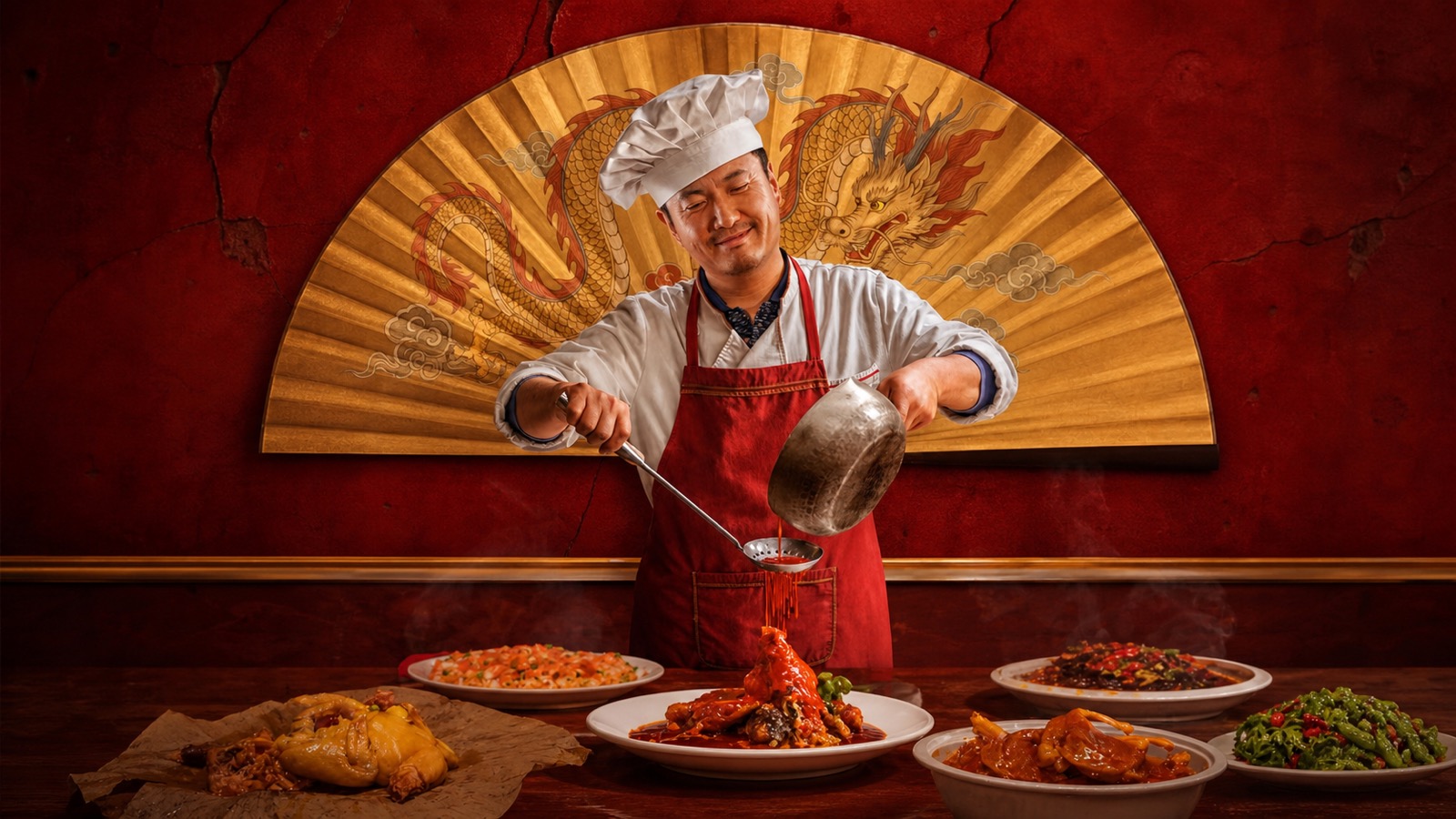
The real "China Dragon" restaurant went through the same transformation. It first served foreign journalists; after moving near the Green Zone, its customers gradually became American and British soldiers and staff. Whoever drew a stable salary in dollars, whoever could pass the checkpoints—they were the ones more likely to pull out a chair and sit down.
The bills were settled as usual; on paper it looked like nothing more than business. But outside the door there was no longer an ordinary marketplace: whose roadblocks the vegetable truck had to pass, whose pockets the dollars came out of, whose neighborhood the explosions finally landed in—all of it was written into that meal.
Later, the film hands this question back to Xu Fu, face to face. A bombing engineered by Lao Zha kills the restaurant's customers, and Xu Fu still wants to say he is only a man who cooks. An American officer asks him: your partner blew up your customers—do you still think this war has nothing to do with you?
Xu Fu does not answer. The people in the restaurant, once strangers to one another, have been written into the same story by a single explosion.
Soon afterward, even going to the market to buy vegetables becomes a journey one might not return from.
II. A Vegetable Truck Drives Into a Collapsing Country
In March 2005, Chen Xianzhong, who ran the restaurant "Yan Long Wan," drove to the vegetable market. Three gunmen dragged him toward the back seat, a rifle butt slamming into his head; shopkeepers nearby who knew him opened fire in return, and only then was he pulled back.
A few weeks later, a Chinese employee was robbed—the car and fifty thousand dollars in payment for goods were taken. On July 30, a suicide bombing nearby shattered every pane of glass in the restaurant, and most of the ceiling came down with it. At that moment, by pure chance, no one was inside.
Going to the market, receiving a delivery, opening for business—actions too mundane to record anywhere else could, in Baghdad, become the last thing a person ever did.
Liu Lei, another Chinese businessman who went to Iraq to open a restaurant in those years, tried to buy life insurance before setting out. Several insurers told him that war zones fell under exclusion clauses: they could collect the premium, but if anything happened, they would not pay. He took the news of the American president declaring major combat operations over and went to argue with the manager of an American-owned insurance company, finally securing coverage of five or six hundred thousand yuan, and set off with 3,700 US dollars.
Only after reaching Baghdad did he understand what "war zone" on the policy meant. More than a dozen mortar shells fell within fifty meters of the restaurant; one shell struck a nearby Nepalese military camp, killing sixteen people on the spot. Not one landed squarely on the restaurant. Recalling those days later, he used only two words: gambling with my life.
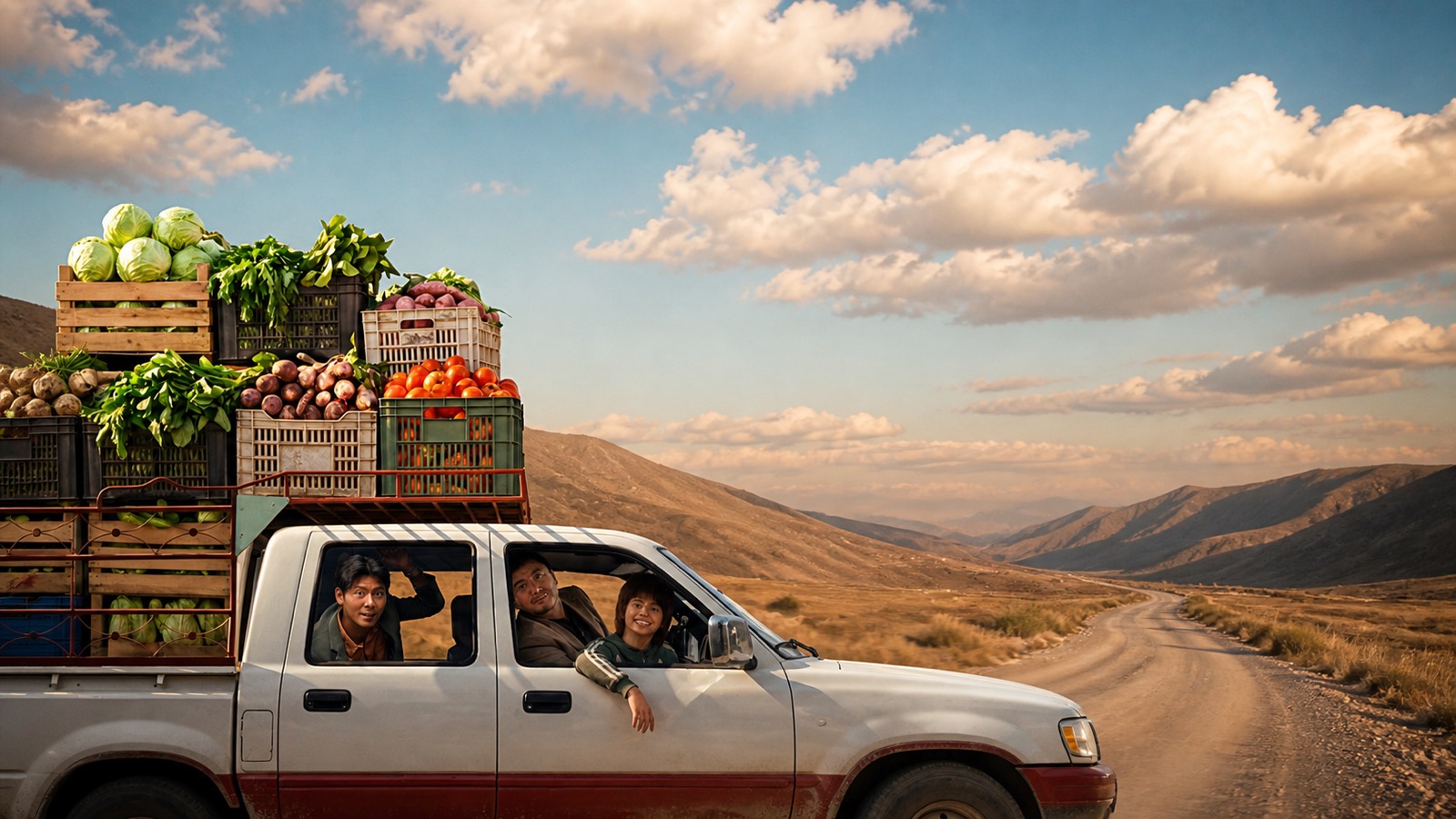
How close is a country to an ordinary person? For Chen Xianzhong, it was whether a permit still counted at the next intersection, whether the men behind the roadblock wore uniforms or plain clothes, whether—when danger came—there was any such thing as a place to call the police.
After the First World War, Britain folded three former Ottoman provinces—Baghdad, Basra, and Mosul—into the framework of a new state. Borders on a map can be drawn quickly; the Arabs, Kurds, and Turkmen living within them, along with their different religions and tribes, could not be rewritten by a single stroke of the pen.
In 1920, an uprising against British rule spread from the middle Euphrates. After it was crushed, Britain turned to indirect rule, installing Faisal as king the following year. A new flag went up, but a harder question remained: how to make people of such different backgrounds believe that the same set of state institutions would protect them, too.
The kingdom, the republic, and the Baathist regime that followed kept rewriting that question. The Iran–Iraq War lasted eight years, from 1980 to 1988; in 1990, Iraq invaded Kuwait, and the Gulf War followed. Air strikes wrecked electricity, water, and transport, and comprehensive UN sanctions ran from 1990 to 2003. The Oil-for-Food Programme, launched at the end of 1996, became the main channel through which many families obtained food and medicine. When the bombs fell in 2003, they did not strike an intact society, but a web already stretched and torn, again and again, by war, dictatorship, and scarcity.
On March 20, 2003, the American and British coalition invaded Iraq. Saddam's regime was accused of possessing weapons of mass destruction; later investigations never found the claimed stockpiles.
After the regime fell, the occupation authorities carried out de-Baathification and disbanded the army. Vast numbers of civil servants, teachers, and soldiers suddenly lost their positions and incomes. The weapons remained, but the windows where salaries were paid had closed; the uniforms came off, and humiliation, anger, and the pressure to survive walked back onto the streets together.
Decisions made in parliaments and barracks ultimately landed as a permit that no longer worked, a road no one dared travel, a small shop waiting for customers who never came.
When the state stops sustaining daily life, ordinary people can only fill the gaps with their own bodies.
The Iraq Family Health Survey later estimated that from March 2003 to June 2006, about 151,000 people died of violence. By June 2007, UNHCR estimated that more than 4.2 million Iraqis had left their homes: over two million displaced within the country, and over two million more fleeing to neighboring states.
On a map, populations merely shift from one column to another. Falling upon a single family, it means a mother sewing documents into her clothes; a child allowed to choose only a few things from among schoolbooks, winter coats, and a photograph of a grandfather; and, once the door is locked, no one knowing whether the key in their hand will ever be used again.
On a phone screen, war weighs far less. A city shrinks to a bright dot, a column of smoke gets set to music; someone types "just bomb them" in the comments, a thumb flicks, and the next video has already begun. The people inside the city are still stuck in the previous second: how long the hospital's backup power will hold, whether the water truck dares to pass the checkpoint, which wall a child should hug on the walk home from school.
The next day, the person who typed that comment goes to work as usual. On the other side, someone is still searching a list, over and over, for the names of their family.
Lao Zha in the film once fussed over salt and sweetness, once fretted over business. After violence took his wife and daughter, he began manufacturing new deaths. The man who lost his family yesterday makes another family lose theirs today; when that family's child grows up, whose face will he remember?
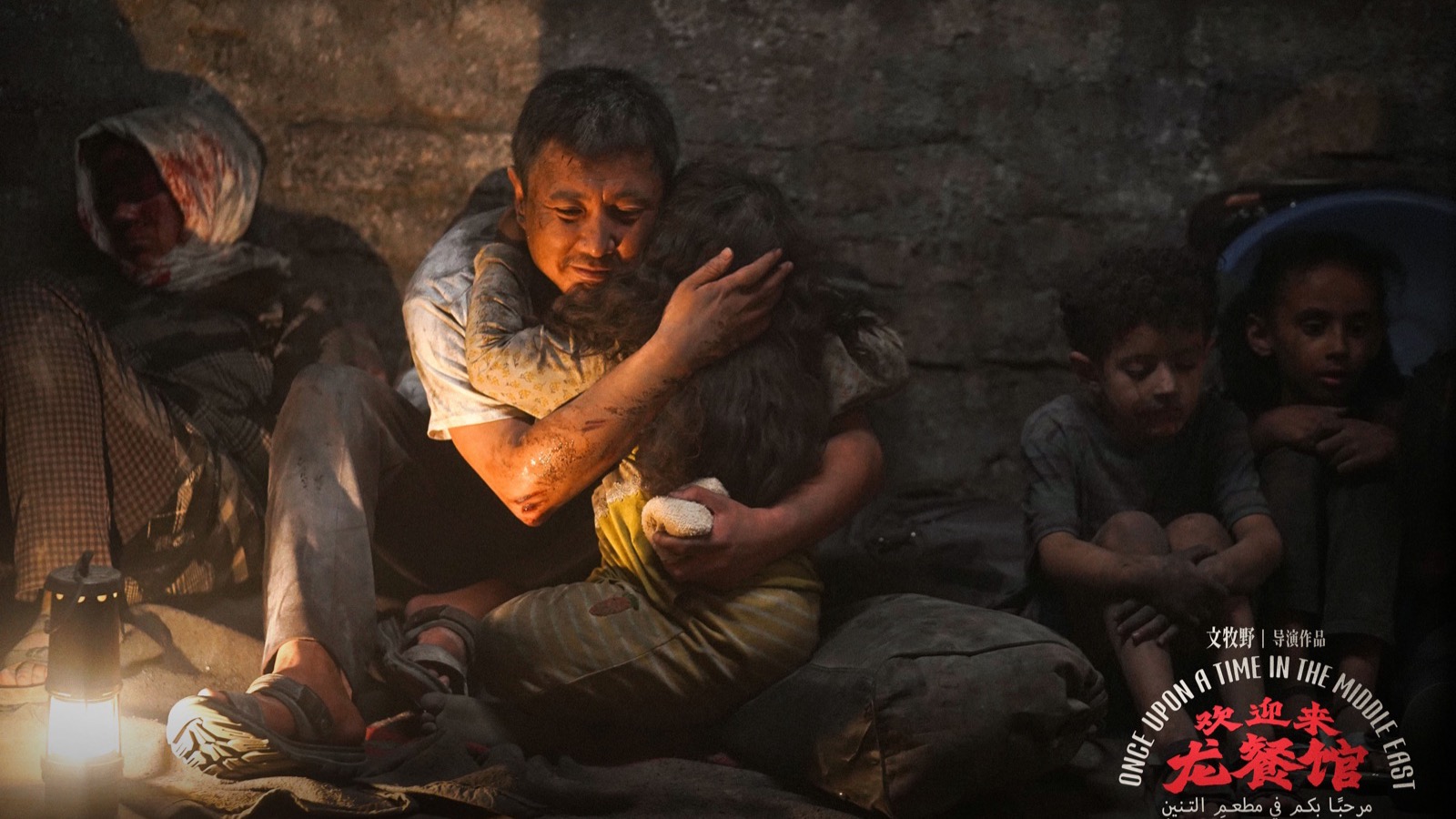
The origins of the two names, Sunni and Shia, do lie far in the past. In 632, after the Prophet Muhammad died, the first question facing the Muslim community was who should succeed him as leader. One group of followers backed Abu Bakr as caliph; another held that leadership belonged to Ali—the Prophet's cousin and son-in-law—and his family. What began as a dispute over political succession gradually settled into different understandings of religious authority, law, and ritual.
In 680, Ali's son Husayn and his followers were killed by Umayyad forces at Karbala, in present-day Iraq. That death became the core Shia memory of martyrdom, injustice, and resistance. Over the long centuries, Iraqi cities such as Karbala, Najaf, and Samarra became major holy sites.
Yet in the far longer stretch of everyday life, Sunnis and Shias have also lived side by side, intermarried, even prayed in the same mosques. Ancient disagreements do not set up checkpoints on their own, nor do they pull triggers by themselves. After 2003, the reshuffling of power, the security vacuum, outside forces, and armed groups turned old identities back into chips in the contest for power. In 2006, the al-Askari Shrine in Samarra was bombed, and retaliation spread at once to mosques, neighborhoods, and families.
And so, when the film's interrogators demand "what is your name, where are you from," they are no longer asking about doctrine, but about which list someone intends to put you on.
Answer even slightly differently, and a road home may come to its end.
III. When You See a Soldier, Do You Forget an Invasion?
When the American soldiers walk into the Dragon Restaurant, the camera does not film only their guns. One young soldier crouches down to feed a cat, misses home, and later falls dead in a mosque. Precisely because of this, some viewers grew uneasy: when the invaders are given faces and tears, is the film making excuses for them?
Other viewers saw exactly the opposite. They argued that by keeping the tanks, the bases, and the checkpoints in the frame throughout, the film has already explained why these soldiers are standing on someone else's soil. Still others found the film too restrained—as if laying out every side's suffering were a way of avoiding judgment.
What this argument is really asking is: can a face and a history be seen at the same time?
Sontag wrote about the dilemma of regarding the pain of others. Photographs and films can bring distant suffering suddenly close, but a face alone cannot explain cause and effect. The camera supplies sympathy; history is responsible for explaining where the suffering came from.
On March 20, 2003, it was the American and British coalition that crossed Iraq's border, not the Iraqi army that crossed America's. A soldier's fear and longing for his family are real; the responsibility of the state that launched the war is not diminished by one ounce because of it.
That young soldier who later fell in the mosque was just as far from the people who decided the war. The men who authorized the operation were not in his armored vehicle; the men who approved the supplementary budgets never had to pass a checkpoint; and the companies that manufactured the weapons would break the long war down into orders, deliveries, and revenue.
In 1961, Eisenhower—a man who had himself commanded wars—warned in his farewell address against the undue influence of the "military-industrial complex." More than sixty years later, the Stockholm International Peace Research Institute calculated that the world's hundred largest arms and military services companies earned 679 billion US dollars in arms revenue in 2024.
The annual reports will never show the face of that soldier crouching to feed a cat—only growth rates. And when the death notice reaches a family's door, the purchase order is not attached.
The young American soldier crossed the border with an invading army; young Saif could only grow up in an occupied neighborhood. One entered someone else's city in an armored vehicle; the other shouldered a schoolbag that no longer carried books. The war finally brought them face to face at the muzzle of a gun—while the men who signed the orders and approved the budgets sat, throughout, in rooms the gunfire could never reach.
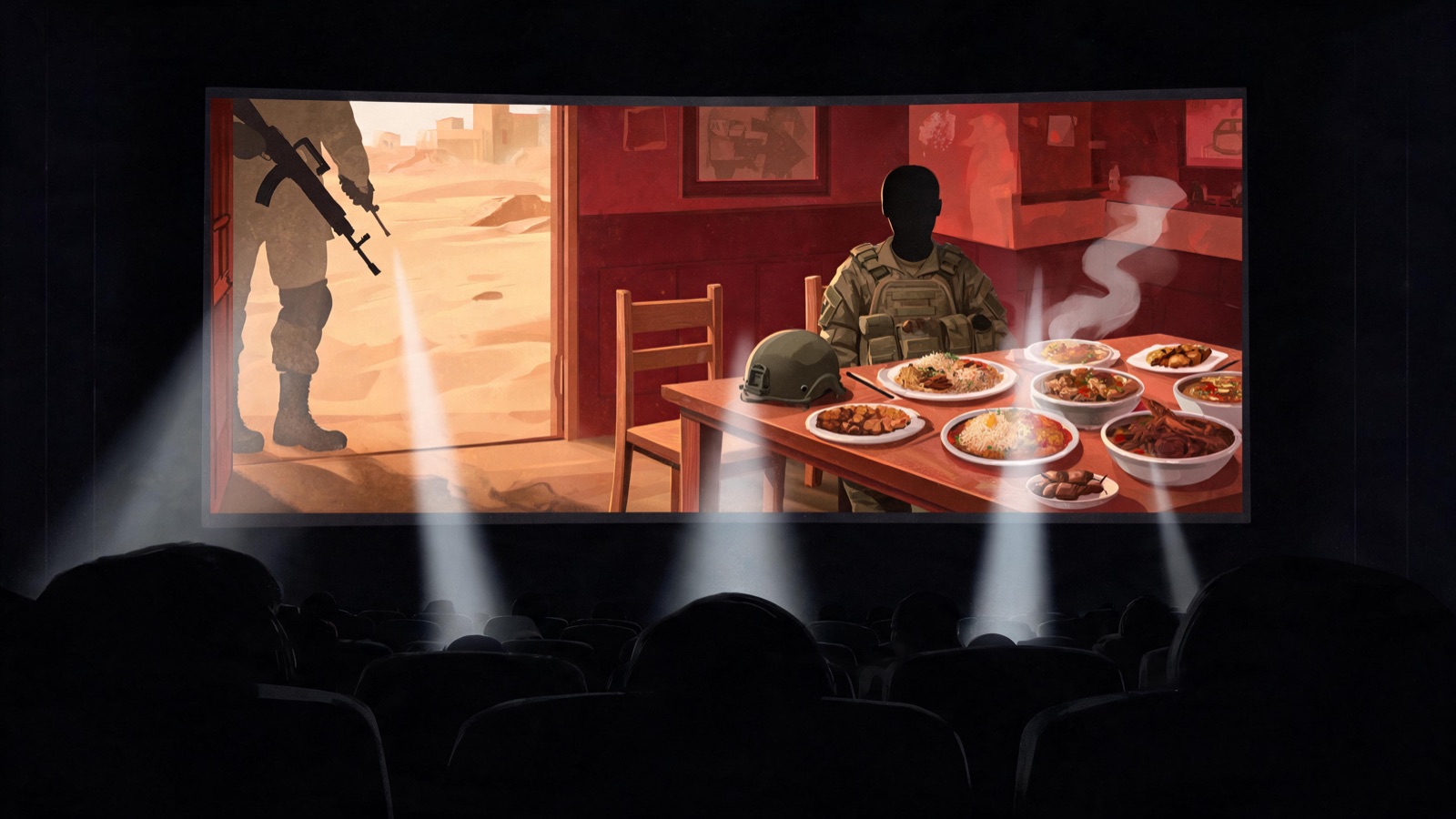
To film a soldier as a human being is not to film an invasion as just; and to state the invasion plainly, one need not film every soldier as a gun without an origin.
By the same token, if Iraqis can appear in a film only as silent victims or masked gunmen, they too are merely another kind of symbol. Lao Zha can cook; he loved his wife and daughter. After the shelling, he dragged their bodies out of the rubble—and the man who once argued over salty and sweet was left with only one taste. To understand how he got there is not to excuse the innocent people he later hurt; it is to see clearly how violence keeps itself alive through a person's wounds.
The film's idealization remains. Xu Fu's efforts to protect the children are pushed toward legend, and some transformations and rescues arrive more neatly than reality allows. Real rubble rarely waits until the final minute for an embrace.
At the end, the film places its hardest question in the hands of a child. Hands that once held a spoon—and might just as easily have had a gun pressed into them by adults.
IV. Saif Stands at the Stove
Saif waits for the wok to heat, pours in the oil, and practices tossing it. Flames leap up along the rim, and his eyes never leave the food inside.
For those few minutes, he is simply a child learning to cook.
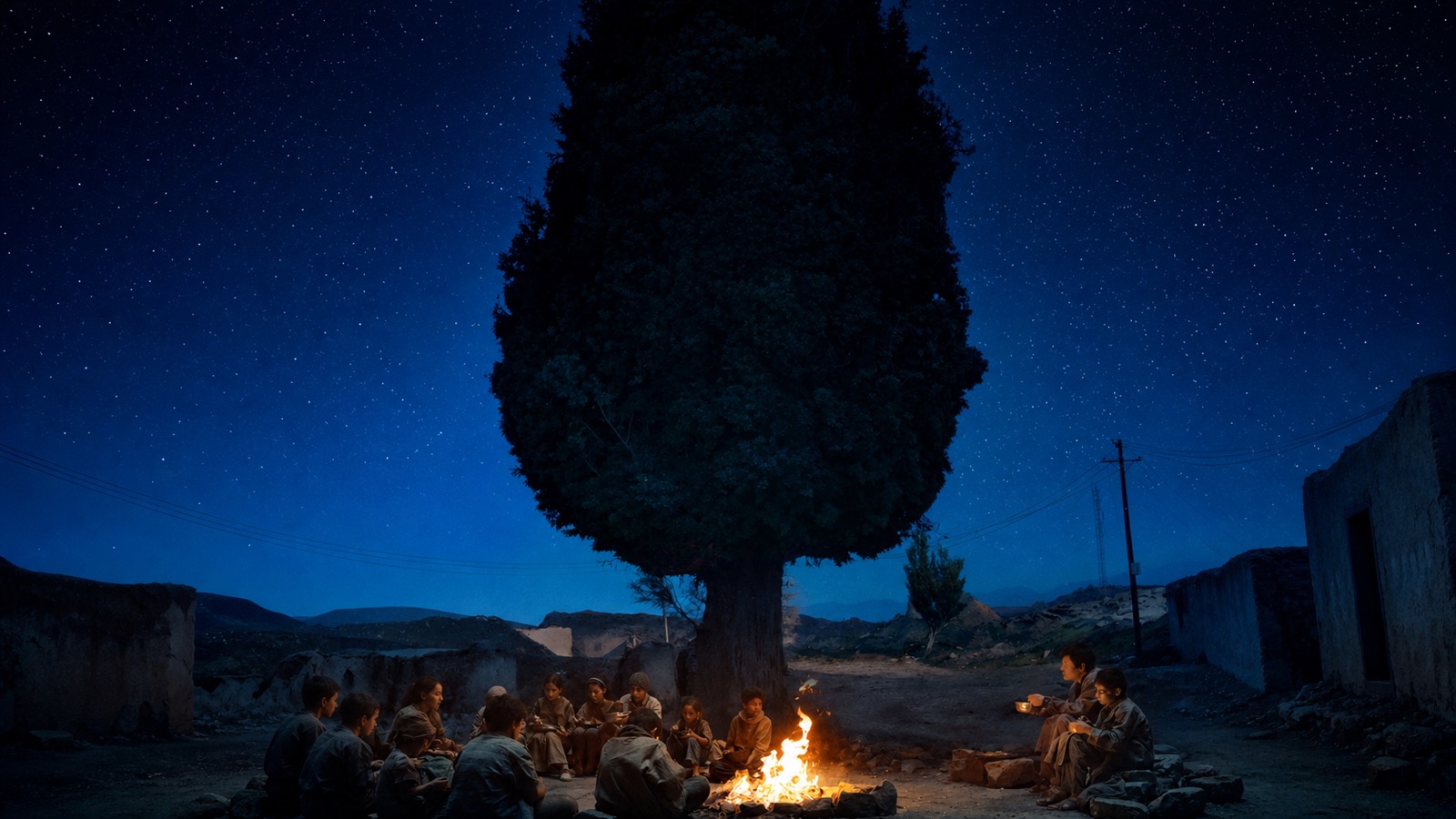
But the war has already prepared another road for him. Adults narrate the pain of losing loved ones as hatred, then hand the hatred to the next generation. A child who has only just eaten his fill shoulders a schoolbag that carries no books and walks away down a road the adults have chosen. A child who could have learned to cook, to fix cars, to read, is ordered to inherit a blood debt he never incurred.
The man who gives Saif the schoolbag is called "the Headmaster." That title should belong with textbooks, blackboards, and the bell at the end of class; what he hands the child is a bomb.
What he fixes his eyes on is precisely the moment Saif lost his family. Over and over he interprets that pain for the boy: grief must find an enemy; to survive is to repay the dead. Once the world in a child's eyes has been deleted down to "us" and "them," the child no longer needs judgment—only to walk the road assigned to him.
In the United Nations records on children and armed conflict, some children are abducted and beaten; some join armed groups out of poverty, to defend their homes, or for revenge; they are used as cooks, messengers, and lookouts, and some are sent to carry out suicide attacks. The schoolbag on Saif's back is not merely a prop the film invented to make audiences shudder.
What "the Headmaster" takes is not just a child's schoolbooks. He blocks the only exit grief has, then names obedience courage.
The tanks still rumble at the street corner, and the gunfire does not stop for a bowl of rice. When danger arrives, Xu Fu hides the children and ladles out food for them; when armed men burst in, he steps one pace further forward to shield them.
Ma Junsheng pays a far greater price for the same kind of choice. And Lao Zha, at last, sees in the children that he is turning the pain of losing his wife and daughter into the reason another child will someday seek revenge.
The film does not shoot food only as comfort. A bottle of watered-down chili sauce once made a gun barrel tilt upward just a little; a basket of potatoes already sprouting is counted by Ma Junsheng into a plan to save the children. The most unremarkable things in a kitchen acquire, on a battlefield, a second use.
On the run, more than twenty children grow hungry. Xu Fu gathers what little food is left and cooks it into one pot of mixed rice. No elegant plating, no restaurant customers fussing over salt—the children simply crowd around the pot, waiting for a hot bowl.
Many years later, this dish made from scraps has a name: Xu Fu Rice.
A meal cannot end an occupation, and it cannot bring back the dead. But while eating, a child gets hungry, complains the food is too spicy, scrapes the last grains from the bottom of the bowl, needs someone to watch over him. For that moment, he is not a weapon.
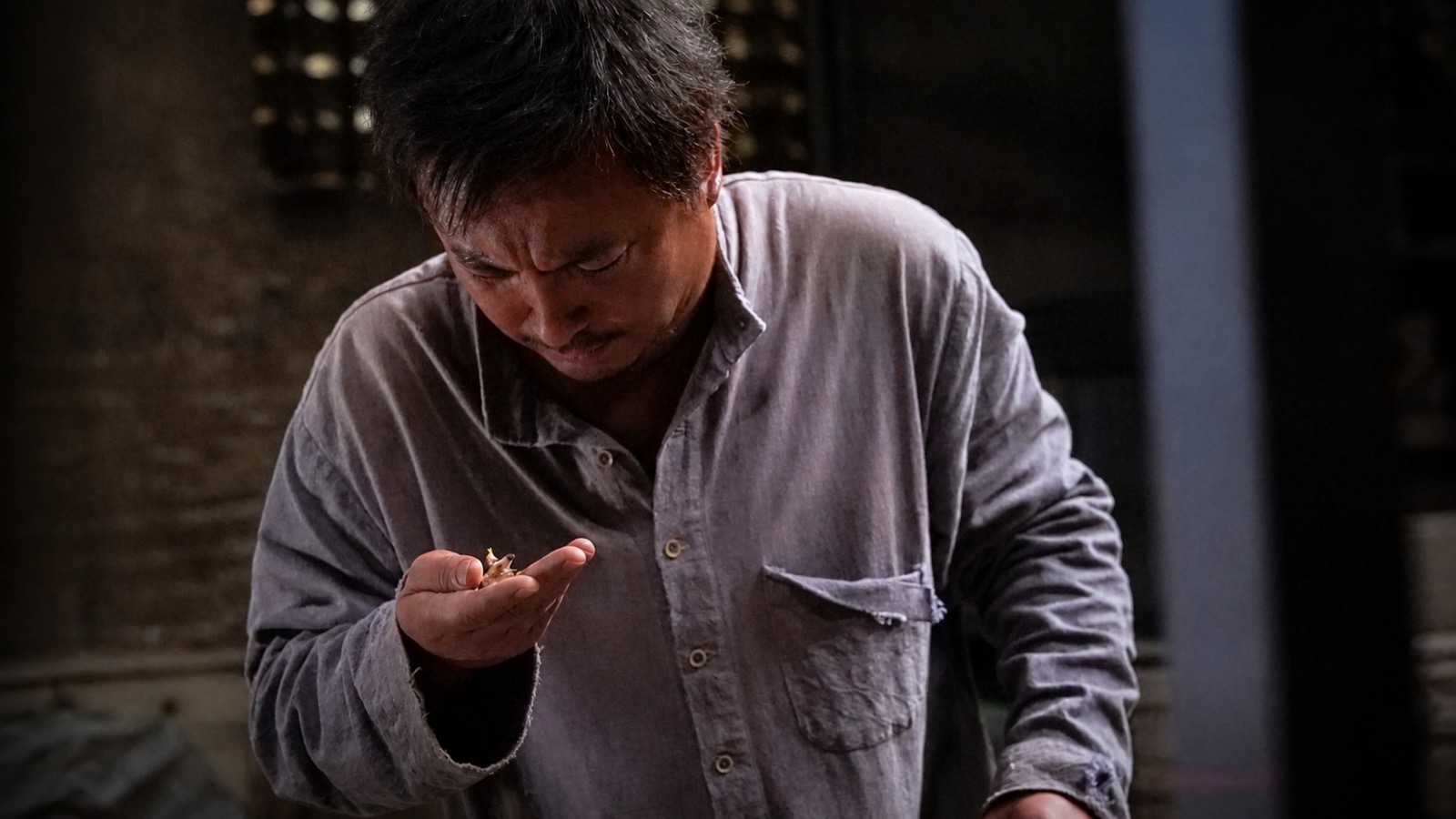
All Xu Fu can bring to bear is a pair of hands accustomed to gripping a spatula. And the choices he makes, again and again, are never grand ones: whether to open the door, whether to hide the children, whether to step back when danger comes.
As long as Saif is still asking whether the food in the wok is done, he does not yet have to answer the hatred the adults have prepared for him.
An ordinary person can do very little. A state has far more choices.
V. China Did Not Join the Invasion, but It Walked Into Postwar Iraq
On March 20, 2003, China's Ministry of Foreign Affairs publicly opposed the use of force against Iraq in circumvention of the UN Security Council, demanding a halt to military operations and a return to the track of political settlement. China did not join the invasion, nor did it become an occupier.
After the war, Chinese companies entered Iraq's oil fields, power stations, telecommunications, roads, and schools. In 2015, China and Iraq established a strategic partnership, with energy as the pillar of cooperation.
By 2024, bilateral trade between China and Iraq reached 54.26 billion US dollars. China imported 38.28 billion dollars' worth of goods from Iraq, of which crude oil accounted for roughly 37.03 billion. Iraqi oil flows east into Chinese refineries; Chinese equipment, engineering, and goods travel west to Iraq.
On a spreadsheet, this is trade. On the ground, it is an oil well, a stretch of highway, a classroom that finally has windows.
The 2019 cooperation framework channeled the revenue from 100,000 barrels of oil per day into infrastructure financing. In 2021, Iraq signed contracts with two Chinese companies to build 1,000 schools. By April 2025, Iraq's education authorities said all 1,000 schools were in use.
Children sit in new classrooms, windows keep out the wind and sand, and no one has to crowd into dangerous old school buildings anymore. This is the most concrete part of what a completed project means.
The same announcement also said Iraq still lacks roughly 8,000 schools.
The thousand schools built are real, and the shortfall of eight thousand is real too. Foreign companies can pave roads, put up buildings, and deliver equipment, but they cannot allocate resources on behalf of local politics, nor rebuild a society's trust on its behalf.
China is not a bystander without interests. Oil, contracts, markets, and diplomatic influence are all part of the cooperation. That states have interests is no surprise; what matters more is how those interests are obtained—and how much work, skill, and functioning daily life remains locally after the projects end.
The projects are real, and so are the interests. In judging a partnership, what counts in the end is whether life was left behind.
This has also given China a different kind of position in the Middle East: it not only sits at the trading table, it has begun inviting sworn enemies to sit at the same one.
VI. From the Dinner Table to the Negotiating Table
In March 2023, representatives of Saudi Arabia and Iran announced in Beijing that they would restore diplomatic relations. In the photographs, the three delegations stand side by side, the flags behind them smooth and unwrinkled, and there is not a single dish on the table.
Before that photograph, Iraq and Oman had spent years laying the groundwork for contact between the two sides. China hosted the final stage of the dialogue, catching the step that the regional states had set in place. The handshake could be completed in Beijing; the restraint that must follow has to return to Riyadh, to Tehran, and to the daily life of the whole Middle East.
In the Middle East, China is an oil buyer, a builder of infrastructure, and, in recent years, an increasingly active mediator. From these roles it gains energy security, overseas markets, and diplomatic influence. Its advantage is that it does not carry the identity of the 2003 war's initiator and occupier; its limit is that trade, engineering, and diplomacy cannot accomplish political reconciliation on a society's behalf.
A contract bears two signatures, but it does not guarantee that every ordinary person receives a fair share. After the cranes drive away, how much work and skill remains locally; after the oil is loaded onto ships, how much reaches schools, hospitals, and the power grid; after the delegates shake hands, whether the people who will never sit at the negotiating table can be spared one more explosion—grand diplomacy must ultimately be redeemed in these places.
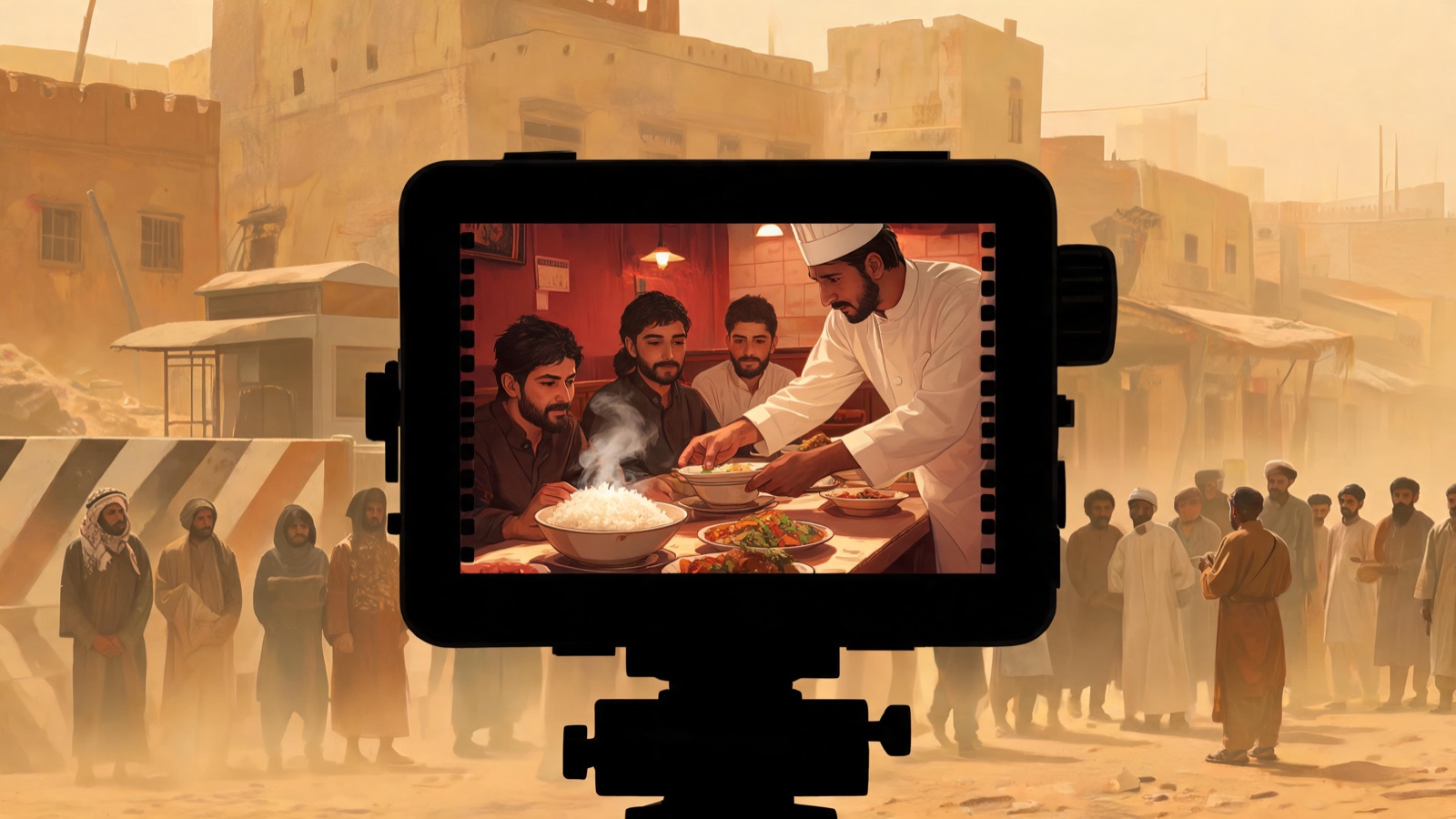
For a city that has lived through war, the answer is often very small: the roads are passable, school is in session, and the people who went to the market come home at dusk.
In the Dragon Restaurant, Xu Fu could decide only whether a door opened and whom a bowl of rice was handed to. What a state can decide is whether to enter another country with tanks, contracts, or negotiations—and it must bear the consequences each choice leaves behind.
VII. To Eat a Meal in Peace Is Itself Peace
Near the end of the film, some have not come back, and some have picked up the spatula again. More than twenty years later, Xu Fu—his hair now gray—returns to the Dragon Restaurant and sees a new dish on the menu: Xu Fu Rice.
In the back kitchen, a grown chef tosses a wok with his back turned. Xu Fu stands outside the door and does not call out the name. The audience waits for the chef to turn around; the film stops on his back.
Saif does not need to turn around. The dish has already told us how he went on to live.
Outside the window, perhaps a car is passing. In the kitchen someone is calling you to eat; the food on the table has gone a little cold. The people who left in the morning will come home at night, the vegetable truck does not have to detour around gunfire, and what the children worry about is tomorrow's exam.
These sounds and small things happen every day, and we rarely bother to name them.
But this is peace.
That we can sit down and finish a meal in peace is not merely today's good luck. Behind the dinner table are roads that can be traveled, schools whose bells still ring, rules that can be trusted—and the choices a country has made about war and peace.
What the film leaves behind are things that are very small, and very hard to forget: a door not closed in time, a bowl of rice handed to a stranger's child, a hand that once held a spoon.
Twenty years ago, Saif was nearly sent off to learn how to detonate himself.
Twenty years later, he looks down at the fire beneath the wok.
This time, all he has to worry about is the heat.
References
[1] Toby Dodge, Inventing Iraq: The Failure of Nation Building and a History Denied. Columbia University Press, 2003.
[2] Fanar Haddad, Understanding “Sectarianism”: Sunni-Shia Relations in the Modern Arab World. Oxford University Press, 2020.
[3] Charles Tripp, A History of Iraq, 3rd ed. Cambridge University Press, 2007.
[4] Iraq Family Health Survey Study Group, “Violence-Related Mortality in Iraq from 2002 to 2006,” New England Journal of Medicine, 2008; UNHCR, “Number of Iraqi Displaced Tops 4.2 Million,” 2007.
[5] Susan Sontag, Regarding the Pain of Others. Farrar, Straus and Giroux, 2003.
[6] Ministry of Foreign Affairs of the People’s Republic of China: statement on the outbreak of the Iraq War (2003); China–Iraq strategic partnership joint statement (2015); China–Saudi Arabia–Iran trilateral joint statement (2023).
[7] Ministry of Commerce of the People’s Republic of China, Country Guide for Outbound Investment and Cooperation—Iraq (2024 Edition).
[8] Iraqi News Agency, reports on the signing and entry into service of the 1,000-school Iraq–China project, 2021–2025.